

How Sports Data APIs Work
You ever been watching a game, you pull out your phone, and the betting odds change in like the blink of an eye? It honestly feels like some kind of magic. But it’s not. It’s just some really, really clever technology. So today, we’re going to pull back the curtain and show you exactly how sports data APIs all works.
TL;DR:
A sports data API lets apps request exactly the sports data they need—odds, player stats, results, or fixtures—using structured parameters. By filtering on things like sport, league, player, market, and bookmaker, developers can pull fast, efficient, real-time data without scraping or processing unnecessary information.
How do sports and betting platform get their data and odds?
So this is the big question, right? How do these apps and platforms get such specific, real-time data for every single player, every game, every type of bet, all at once and all the time? Well, the answer is actually the key to how, you know, a huge part of the modern internet functions. The secret, it turns out, is something that acts like a digital messenger. It’s a little go-between that’s just constantly running around fetching information for all the apps on your phone. And in the tech world, this messenger has a very specific name. It’s called an sports data API, which stands for Application Programming Interface. But honestly, the best way to think about it is like a waiter at a restaurant. You don’t just walk into the kitchen and grab your food, right? No, you give your order, your request, to the waiter. They take that request to the kitchen, which is the database, and they bring back exactly what you asked for. Sports apps are doing this constantly, using APIs to ask for odds.
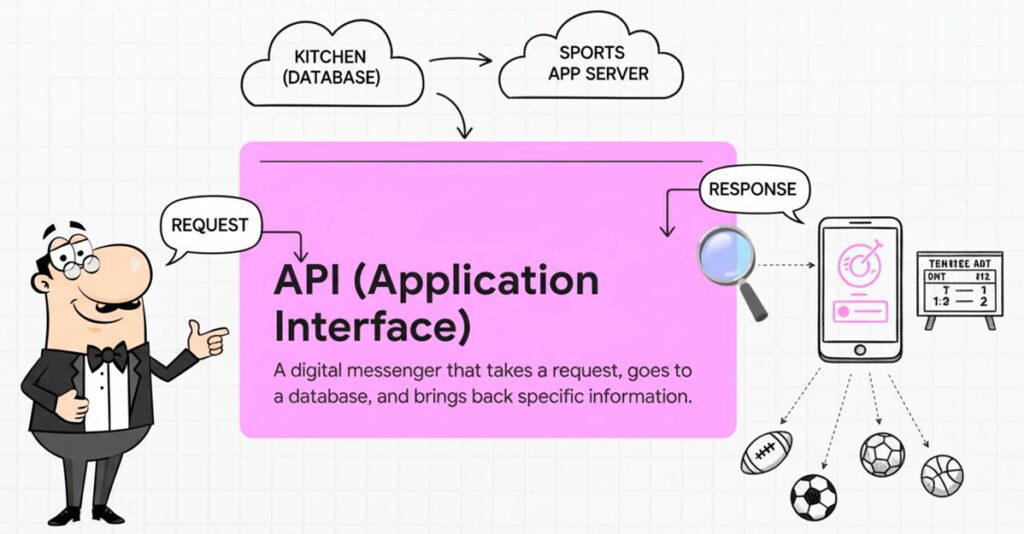
How do we get a response from the data API?
Okay, so how do we actually talk to this digital messenger? Well, let’s build one of these requests for the sports data API from the ground up, piece by piece. To start, we’re going to cast the widest net possible. We’re going to ask our waiter a very, very broad question. All right, check this out. This is our first request. I know it looks kind of like a web address, and that’s basically what it is.
events?apiKey=API_KEY_HERE&leagueID=NBA&oddsAvailable=true
We’re telling the API two simple things here:
- league ID equals NBA. We only want basketball.
- odds available equals true, which just means, hey, don’t show us any games that we can’t actually bet on.
Pretty simple, right? But this one request gets us all the odds for all the upcoming NBA games. But that’s a ton of data, way too much usually. Most of the time, we don’t want the whole menu. We want one specific dish. So let’s get a lot more specific. Let’s filter our results to look for a super popular type of bet, a player prop.
Filter data for specific player prop data
Specifically, how many points a player is going to score. To do that, we just add a new instruction to our request.
events?apiKey=API_KEY_HERE&leagueID=NBA&oddsAvailable=true&oddID=points-PLAYER_ID-game-ou-over
You can see it there, odd IDs. This is our filter. By adding this little piece of code, we’re now telling that messenger, hey, forget all that other stuff. I only care about the odds for any player scoring points. And this is where it gets really cool, because you can see just how flexible this whole system is. That odd ID follows a super logical pattern. You want assists instead of points? You just swap out the word points for assists. Same thing for rebounds or threes made. It’s like changing one word in your order to the waiter. Simple.
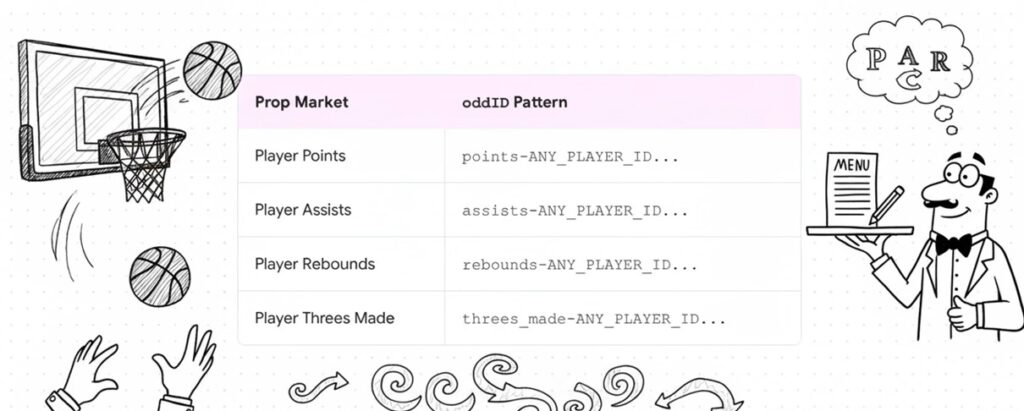
Player total assists – assists-ANY_PLAYER_ID-game-ou-over
Player total rebounds – rebounds-ANY_PLAYER_ID-game-ou-over
Player made threes – threes_made-ANY_PLAYER_ID-game-ou-over
Pinpointing data and odds for a specific player
Okay, so we’ve gone from all NBA odds to just player points odds. Progress. But what if we don’t care about just any player? What if we only care about one guy? Well, let’s narrow that focus down even more. So instead of that generic player ID placeholder we had before, we’ve swapped in a unique identifier for a real player. In this case, Jalen Duren.
events?apiKey=API_KEY_HERE&leagueID=NBA&oddsAvailable=true&oddIDs=points-JALEN_DUREN_1_NBA-game-ou-over
And just like that, our request to the API is now incredibly precise. We’re no longer shouting for all the point player props. We’re asking specifically for the odds on Jalen Duren scoring.
Now, I know what you’re probably thinking. That whole ID string, points-JALEN_DUREN_1_NBA-game-ou-over, it looks like a bunch of computer nonsense. But I promise you, it’s not. It’s actually a perfectly structured sentence, and we’re about to crack the code. Just take a good look at it for a second. Every single part of this, separated by a dash. It means something very, very specific. It’s a language. Yeah, it’s designed for a computer to understand, but it’s built on a logic that’s very, very human.
Understanding the query API code
So what is this language actually telling us? How does the sports data API read this one string of text and know exactly what piece of data to pull from a massive, massive database in just a fraction of a second? This is the absolute key to the whole thing. Every single odd ID is made of five distinct parts:
- The stat: What’s being measured? Points.
- The entity: Who’s it about? Jalen Duren.
- The period: When does this apply? The whole game.
- The bet type: OU. That just stands for over under.
- The side: Which side of that bet are we interested in? The over.
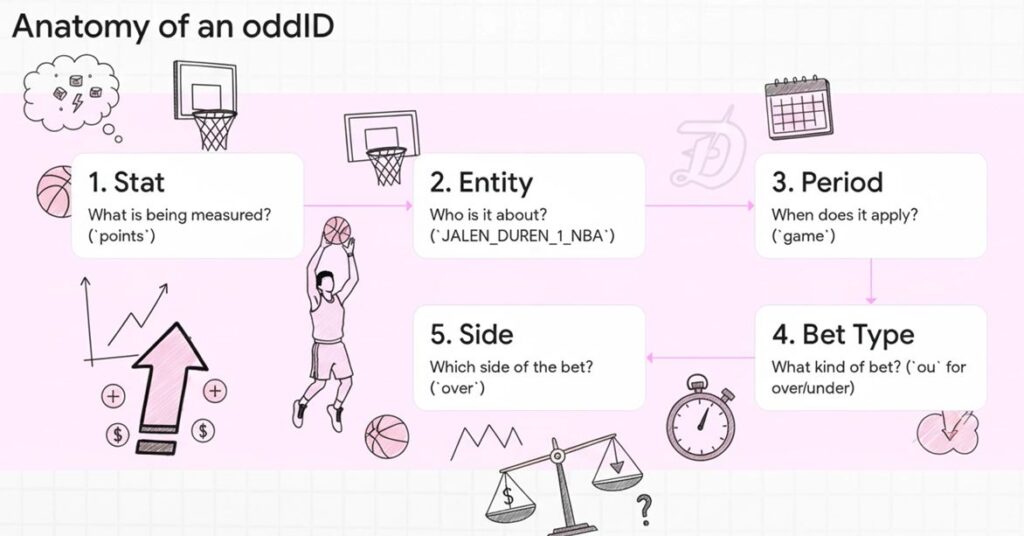
See? It’s not random at all. It’s a precise five-part instruction.
Fine tuning your data and odds API request
So at this point, we’ve built a really powerful and precise request. But in the world of real-time data, speed is absolutely everything.
So the final step is to take our request and supercharge it. Make it not just smart, but as fast and efficient as humanly possible. And to get that data back in milliseconds, there are a few pro tips that make all the difference. For one, we can specify which sportsbooks we want odds from using something called a bookmaker ID. We can specify which sportsbooks we want odds from using something called a bookmaker ID.
- Specify bookmakerID to only include the books you care about, for example: bookmakerID=fanduel,draftkings,hardrockbet,betmgm,circa
This next one is great. Instead of making two separate requests for the over and the under, we can just ask for the over and add include opposing odds true.
- includeOpposingOdds=true
The sport data API is smart enough to know that you’ll want the other side too. It’s like asking for a burger and the waiter just knows you want fries with it. It’s just efficient.
events?apiKey=API_KEY_HERE&leagueID=NBA&oddsAvailable=true&oddIDs=points-JALEN_DUREN_1_NBA-game-ou-over&includeOpposingOdds=true&bookmakerID=fanduel,draftkings,hardrockbet,betmgm,circa
So here is the side-by-side difference:
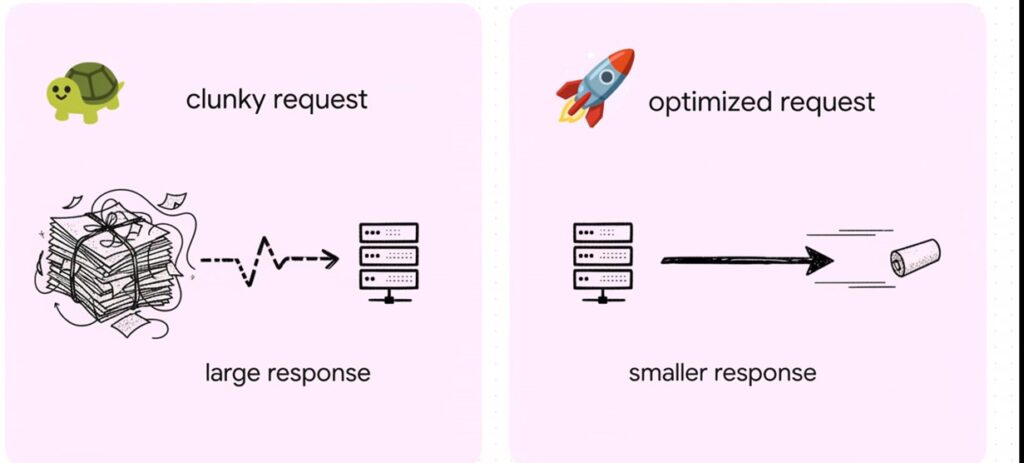
On the left, you’ve got a standard request. It works, sure, but it’s a little clunky.
On the right, you have the optimized version. It asks for less but gets the exact same information and it specifies exactly where to get it from. The end result is a much smaller and much, much faster response. And when you need data instantly, that’s what makes all the difference.
Summary
And that’s really the journey into a sports data API. We started by just asking a super simple question: Give me any and all NBA odds. And just by adding a few logical filters and parameters, we ended up with a request that asks for Jalen Dern’s point total from specific bookmakers in the most efficient way you possibly can.
It just goes to show you that behind all the magic of instant odds is this really elegant system of questions and answers that’s surprisingly logical. And it makes you wonder, right? Now that you know how the language is formed, what questions would you ask? This is the kind of stuff that powers so much of our digital world, from a simple sports bet to the most complex data analysis you can imagine.
Data And Odds API
This guide is based on a leading odds and data API from SportsGameOdds. But the principles of the calls and queries work across other leading data and odds API providers.
Read More: Sports Game Odds API Review | Get NFL Odds Data